
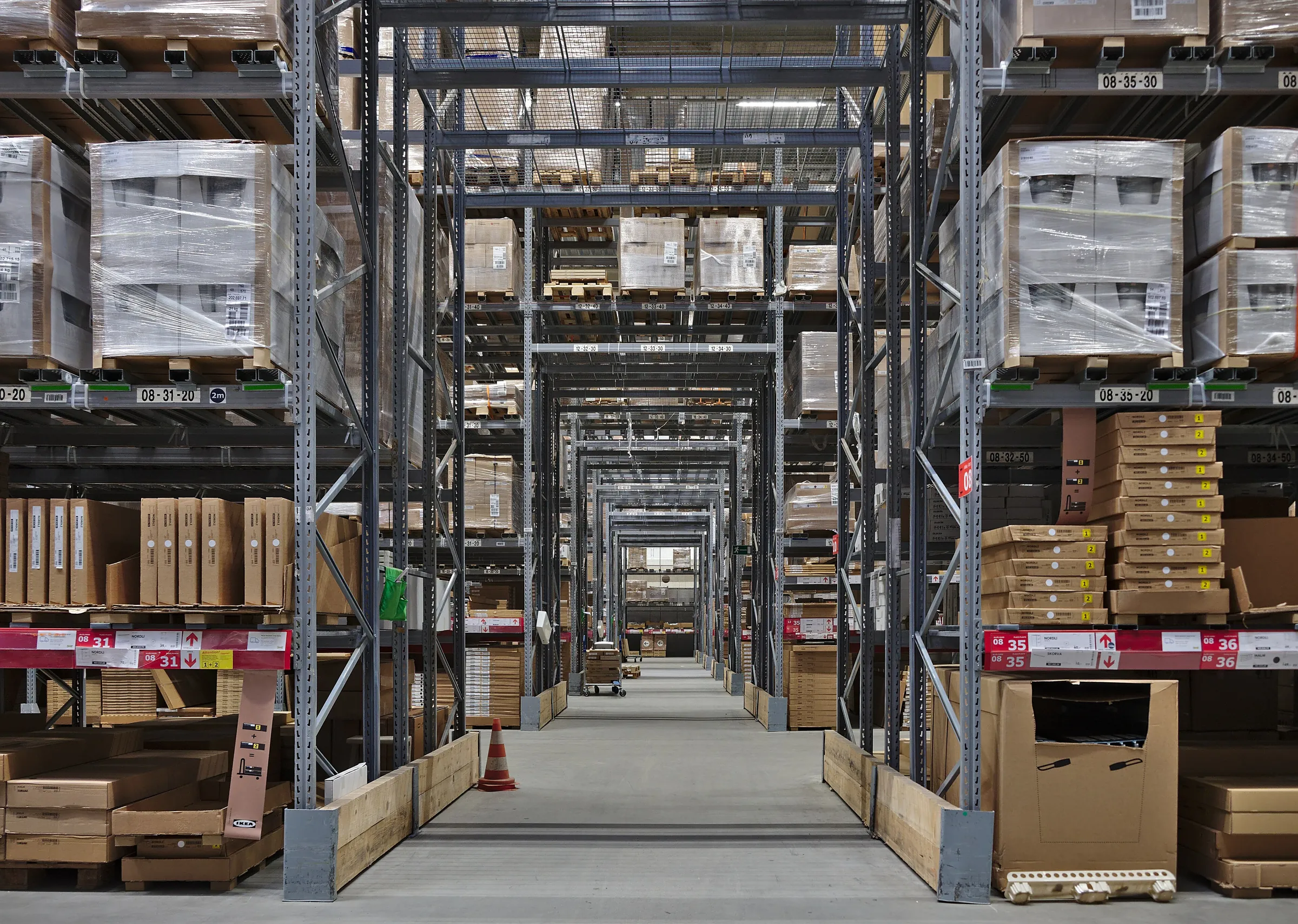
Industrial Wi-Fi for warehouses and logistics in Luxembourg
We design and validate the Wi-Fi network for your storage areas: coverage between the racks, handover from one access point to the next with no drop for scanners and forklifts, and a separate network for automated systems.
Meltwain has deployed 11,853 Wi-Fi access points across 298 sites.
What disturbs the signal in a warehouse
A warehouse is one of the hardest places to cover. The signal changes with the building, and also with what is stored in it.
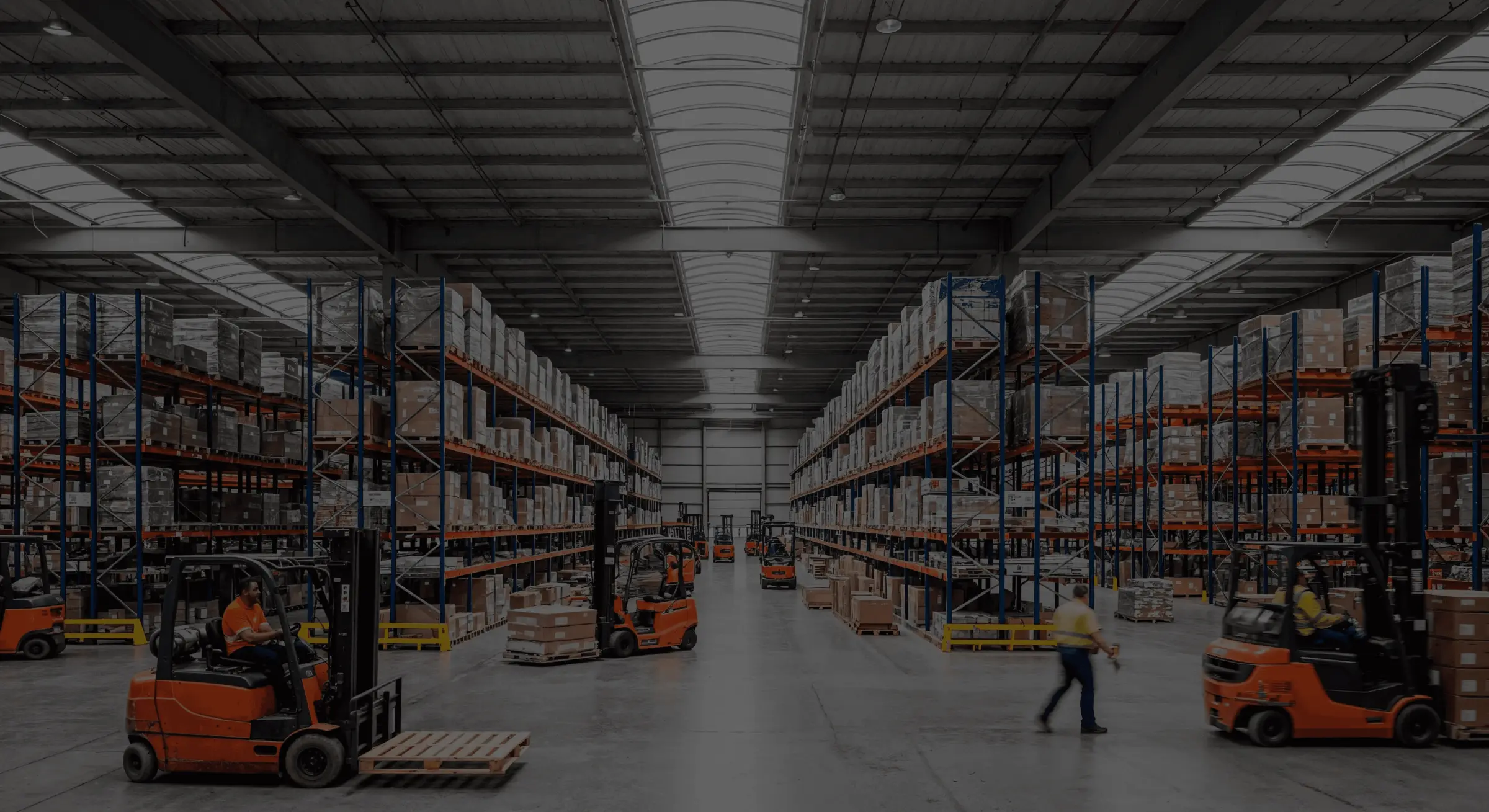
Metal racking
It reflects and blocks radio waves, aisle by aisle.
Ceiling height
An access point mounted too high covers the top of the racks and misses the floor.
Changing stock
Full pallets do not attenuate the signal the way empty ones do.
Moving vehicles
Forklifts and pallet trucks mask the signal as they pass.
Connected devices on the move
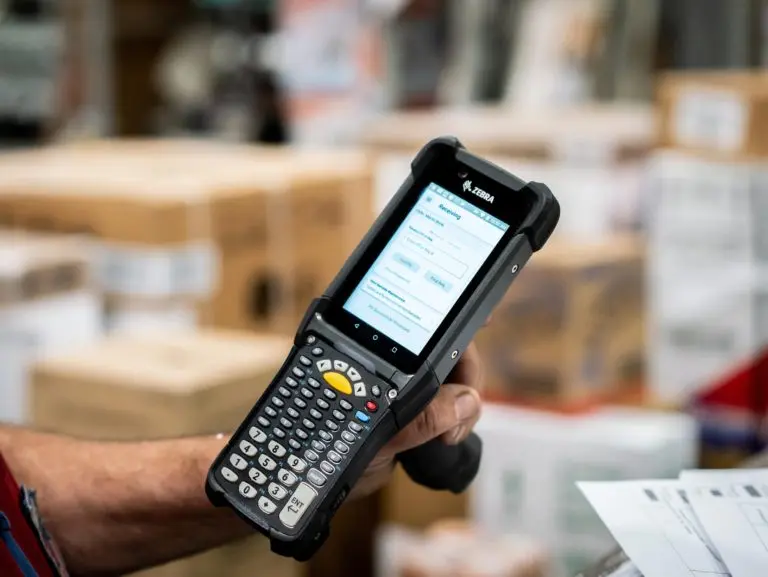
Barcode scanners, vehicle-mounted terminals, RFID trolleys, rugged tablets: these devices change access point constantly as they move. A drop of a few seconds interrupts an order being picked. We tune the network so that this handover from one access point to the next (roaming) happens with no lost session and low latency.
A radio design worked out aisle by aisle
The simulation takes in the racking, the mounting height and the number of devices per area.
Antennas
Directional antennas aimed down the aisles, where a standard antenna gets lost in the metal.
Power
Matched to the power of the handheld devices, so that the link works in both directions.
Channels
A channel plan that keeps neighbouring access points from interfering.
On-site measurements with an AP on a stick
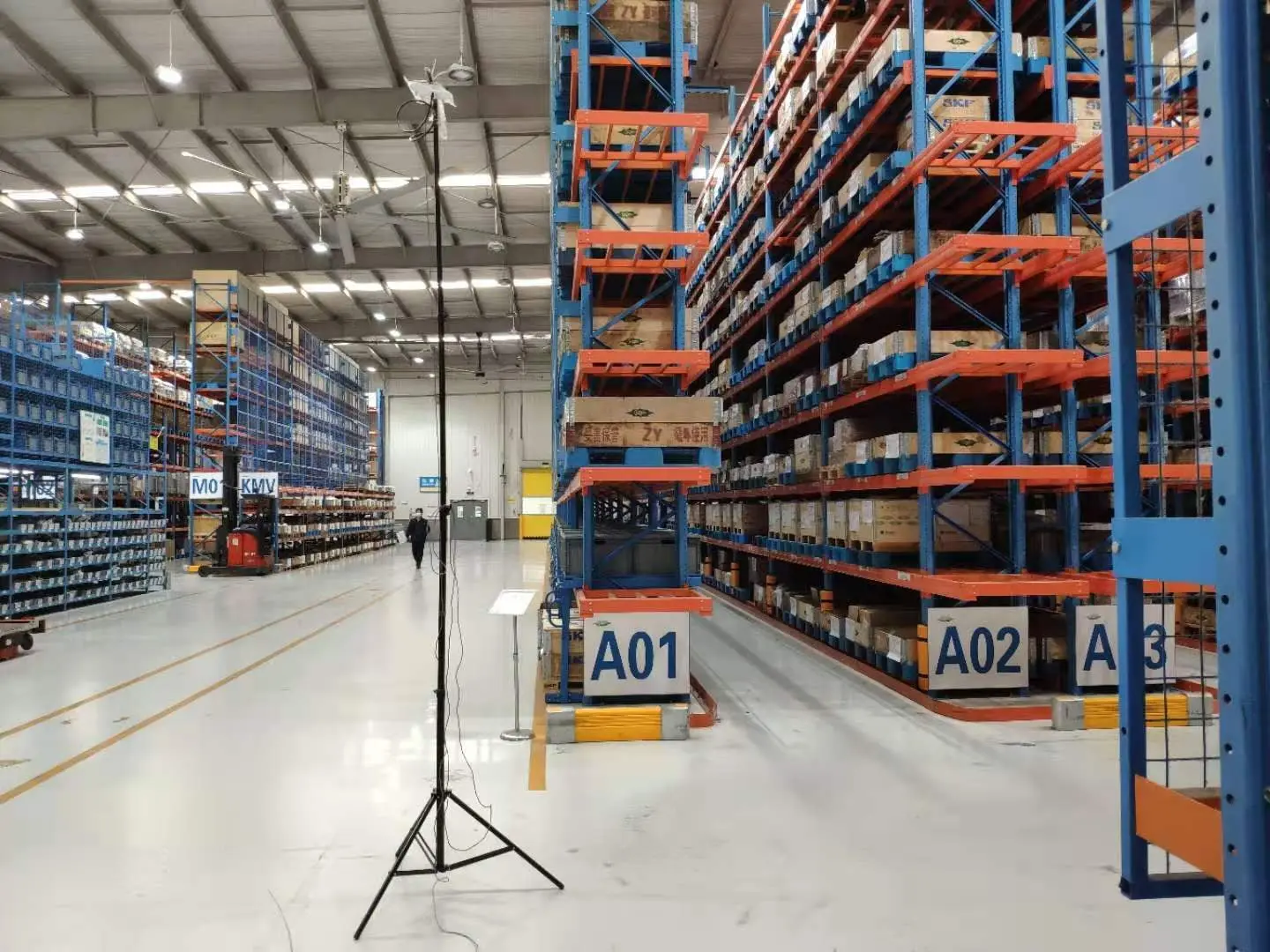
In a warehouse, simulation alone falls short. We raise a test access point on a mast (AP on a stick) to the planned height and measure the real signal in the aisles, with the stock in place. The position is validated before the cable is run.
A segmented network for industrial IoT
Sensors, automated systems and mobile terminals exchange operating data continuously. We put them on separate networks, with access control and encryption, so that an incident on one device does not spread to the others. Automated guided vehicles (AGVs) get a network sized for their whole route.
Validation and acceptance report
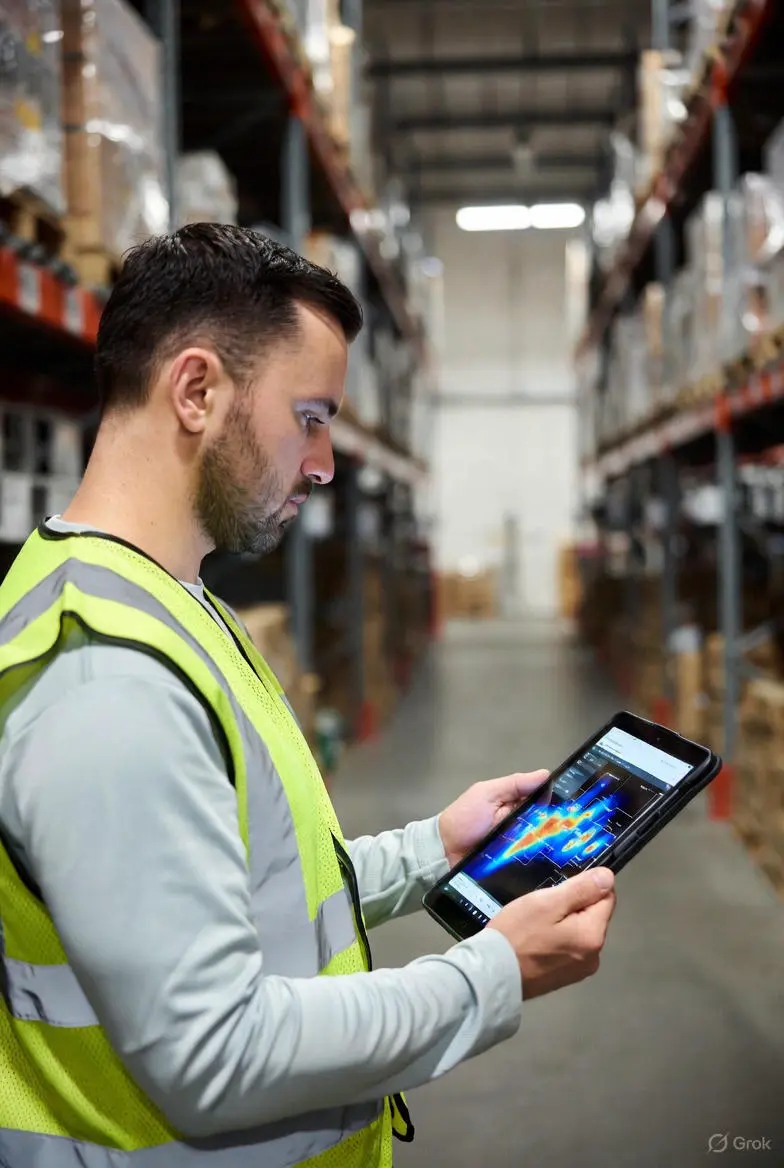
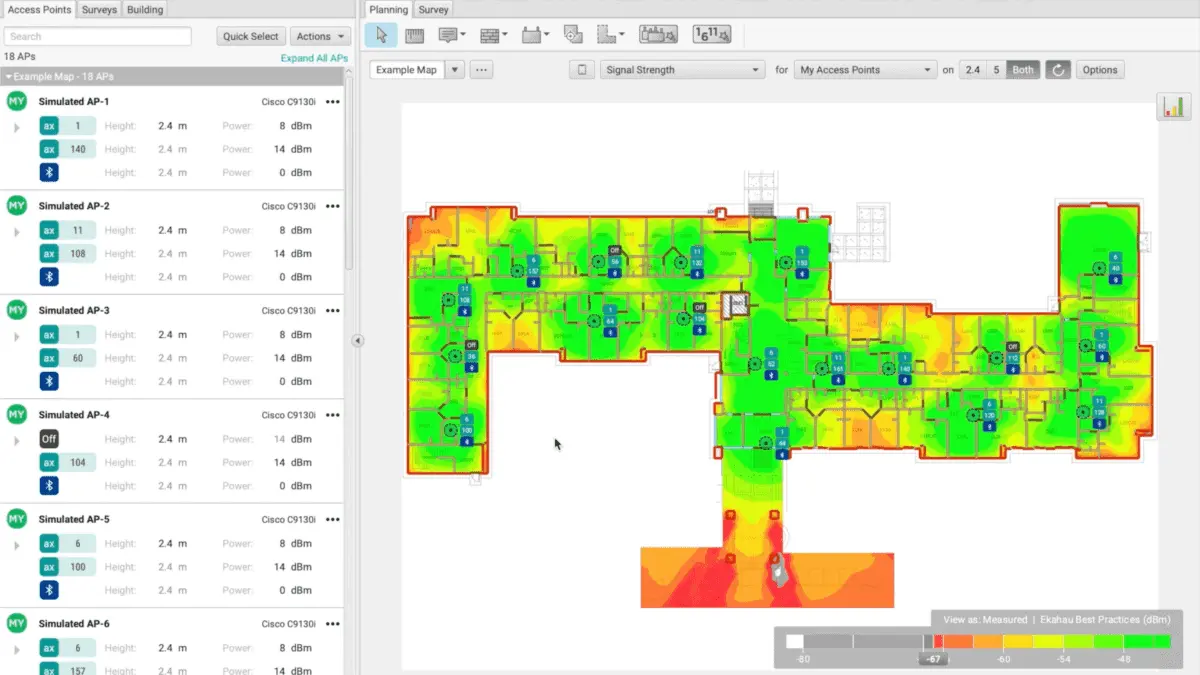
Once the network is live, we measure it in operating conditions.
Coverage
Signal strength in every aisle, from the floor to the top rack level.
Throughput
The real speed a device gets.
Interference
Noise sources found by spectrum analysis.
Roaming
The quality of the handover between access points, device in hand.

The documents you keep
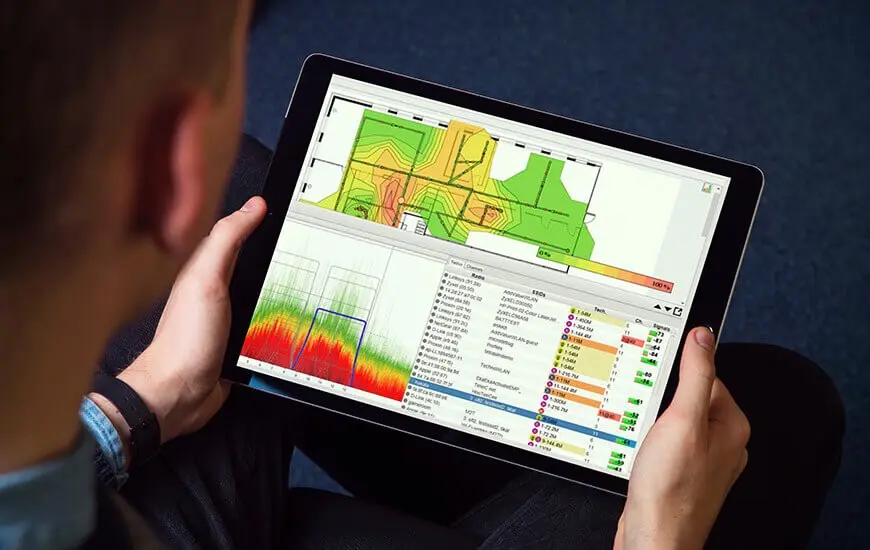
The report documents the infrastructure and is the reference when the site changes: a new storage cell, a new racking layout, new devices. It holds the coverage heatmaps, the measured throughput, the roaming results and the recommendations.
Questions about warehouse Wi-Fi
Why do scanners drop out between two aisles?
Because the scanner has to change access point while moving, and that handover fails when the coverage areas overlap badly. Metal racking creates sharp breaks from one aisle to the next. The fix combines three settings: antenna position and direction, transmit power aligned with that of the devices, and roaming parameters. A measurement on site, device in hand, shows where the session is lost.
Does the survey have to be redone when the storage layout changes?
Not always, but it needs checking. A new row of racks, higher storage or different goods (liquids, metal) change how radio waves travel. The validation report is the point of comparison: a few measurements in the changed area are enough to say whether the network still meets the thresholds or whether an access point must be added or moved.
Is Wi-Fi suitable for automated guided vehicles (AGVs)?
Yes, provided it is designed for them. An AGV that loses the network stops: it needs continuous coverage along its whole route, fast handover between access points and stable latency. These requirements are set at scoping, from the vehicle manufacturer's specifications, then checked on site along the real route.
Can you measure without stopping operations?
Yes. Measurements are taken on foot, with the warehouse working and the network up. These are the right conditions to measure in: stock in place and vehicles moving. We agree the times and the site's safety rules with you before entering the aisles. Only an AP-on-a-stick test needs a space to be cleared.
Do you also cover loading docks and outdoor areas?
Yes. The areas to cover are listed at scoping: storage cells, loading docks, offices, outdoor areas. Docks and yards need access points built for outdoor use and settings that keep the connection when a forklift moves from the building to the dock. The on-site survey measures these transition areas, where drops often appear.