WiFi 7: The High-Density Advantage
Wi-Fi 7 (802.11be): The new standard for very high-density professional networks

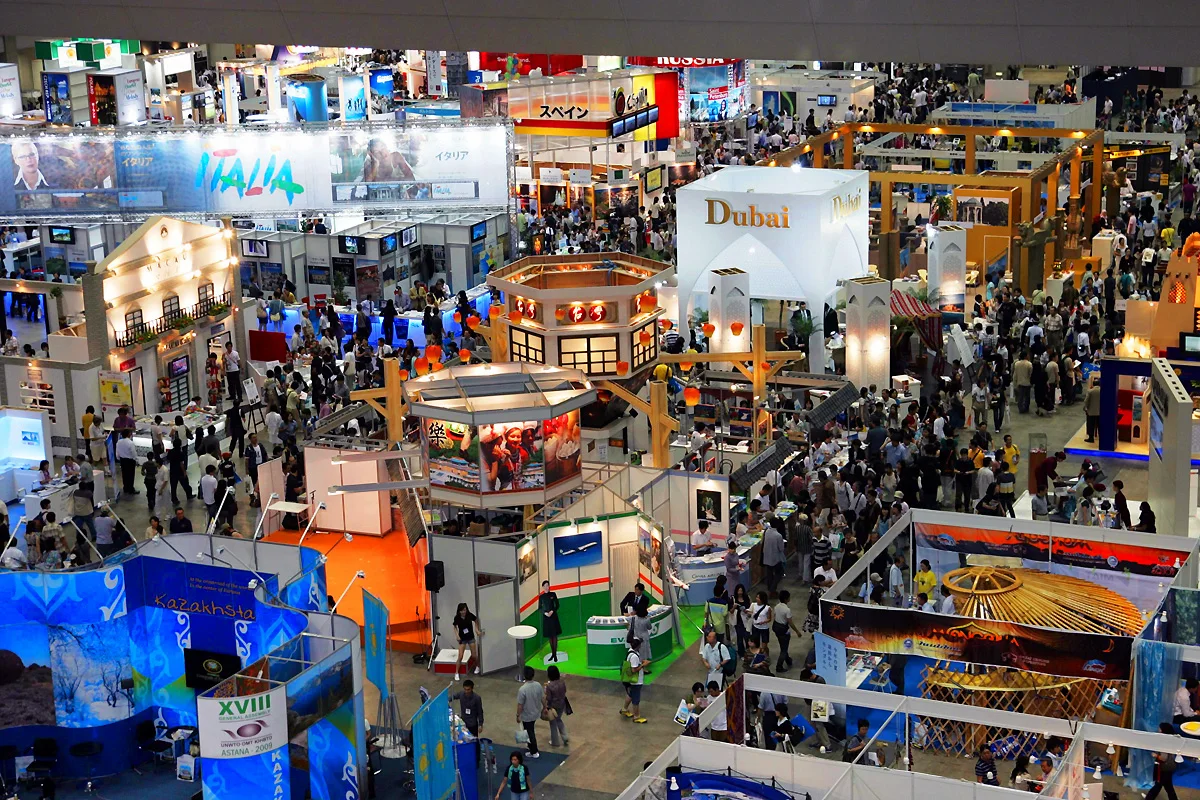
Imagine a Monday morning in a fully packed co-working space: a hundred people are simultaneously starting a video conference. Imagine a warehouse where autonomous robots suddenly stop due to a micro network outage. Imagine a shopping mall on the first day of sales, where payment terminals are struggling because too many customers are trying to connect to the public WiFi.

These scenarios are the nightmare of infrastructure managers. Until now, the solution was to add more WiFi access points, often creating more interference than solutions.

The era of "more access points" is over. Welcome to the era of "smarter" WiFi: WiFi 7 (standard 802.11be).

This is not just a speed upgrade; it’s a complete redesign specifically crafted for very high-density environments and critical requirements. Here’s why your business should pay attention to it right now.

In short: What changes with WiFi 7?

Without drowning you in technical details, remember three major advancements that are game changers for professionals:

  1. "Highways" twice as wide (320 MHz Channels): On the 6 GHz band, WiFi 7 doubles the width of the highway. More space means more data flows without traffic jams.

  2. Increased data density (4K QAM): Each transmitted signal carries 20% more information than WiFi 6. It’s like optimizing the loading of a truck to fit more packages.

  3. The MLO revolution (Multi-Link Operation): This is THE game changer for professionals. We’ll get back to this, but imagine being able to use multiple connections simultaneously for unbeatable reliability.

Sector Analysis: The concrete benefits of WiFi 7

WiFi 7 shines brightest when the network is under pressure. Let’s examine its impact on three particularly demanding environments.

1. Co-Working Spaces and Flexible Offices

In a co-working space, WiFi is not a convenience; it’s the main product you sell. Users are demanding: each has a laptop, a smartphone, a smartwatch, and spends their day on Teams or Zoom.

Current challenges: Saturation during peak hours, unbearable latency during video calls, random disconnections when the user moves from a desk to a meeting room.

The WiFi 7 solution: The end of "lags" in video calls Thanks to its massive capacity and ultra-low latency, WiFi 7 ensures that the 100th person starting a 4K video experiences the same smoothness as the first. The MLO technology allows devices to instantly switch from one band to another if one is congested, making call dropouts nearly impossible.

  • Business benefit: Increased customer satisfaction, reduced churn rate, and justification for premium pricing for an infallible "Business Grade" service.

2. Warehouses and Logistics (Industry 4.0)

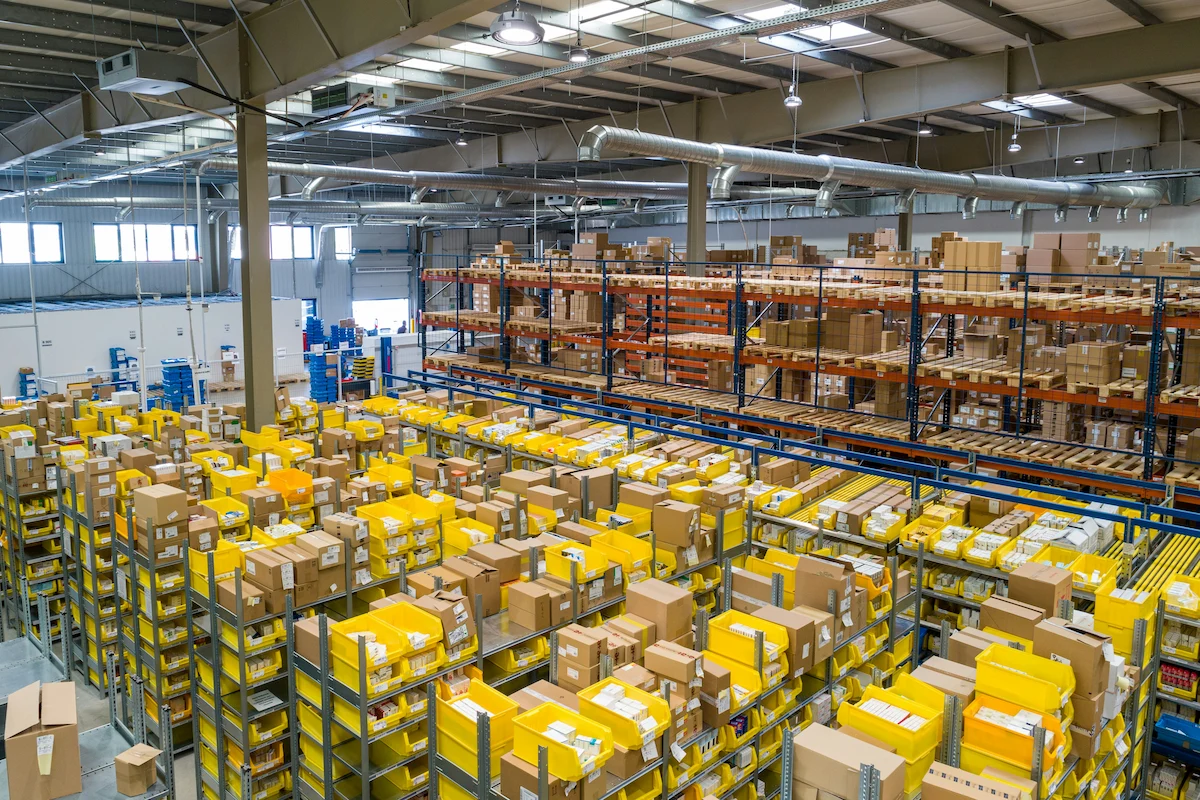
Modern warehouses are no longer just storage places; they are technology hubs. They are filled with metal (which disrupts WiFi), mobile devices (scanners), and increasingly, autonomous robots (AMR).

Current challenges: Dead zones due to metal racking, latency disrupting real-time communication between robots, and the difficulty of managing devices in constant motion.

The WiFi 7 solution: Reliability and Low Latency for Automation In industry, speed matters less than latency (the network's reaction time). WiFi 7 offers near-zero latency, crucial for robots to coordinate their movements without collision. Additionally, improved interference management provides better coverage in hostile environments filled with metal.

  • Business benefit: Fewer picking errors, more advanced automation without resorting to expensive private 5G, and maximum operational continuity.

3. Shopping Malls and Retail (Phygital)

The shopping mall must manage two worlds: a massive "guest" network for thousands of simultaneous visitors and a "critical" network for the stores (payment terminals, inventory management, security cameras).

Current challenges: The guest network saturates and becomes unusable during peak times (sales, Christmas). Worse, this saturation can overflow and impact the store's checkout systems.

The WiFi 7 solution: Segmentation and Massive Capacity WiFi 7 excels at managing thousands of simultaneous connections without collapsing. It effectively segments the traffic: the thousands of customers' smartphones on wide bands, while the payment terminals use dedicated and secure channels, all on the same physical infrastructure.

  • Business benefit: Improved visitor experience (who stays longer), guaranteed business transactions for tenants, and opening up to more precise location-based marketing services.

The Wild Card of WiFi 7: The MLO (Multi-Link Operation)

If there’s one thing to remember, it’s this.

Before WiFi 7, your device would select a frequency band (for example, 5 GHz) and stick to it. If that band was disrupted, you were disconnected until you found another one.

With MLO, your device can connect to both the 5 GHz and 6 GHz bands simultaneously.

  • Aggregation Mode: It combines the speeds of both for phenomenal throughput.

  • Reliability Mode (Most important for professionals): It sends the same data over two bands. If interference blocks the first route, the data still arrives via the second, instantly. This is the end of micro-outages.
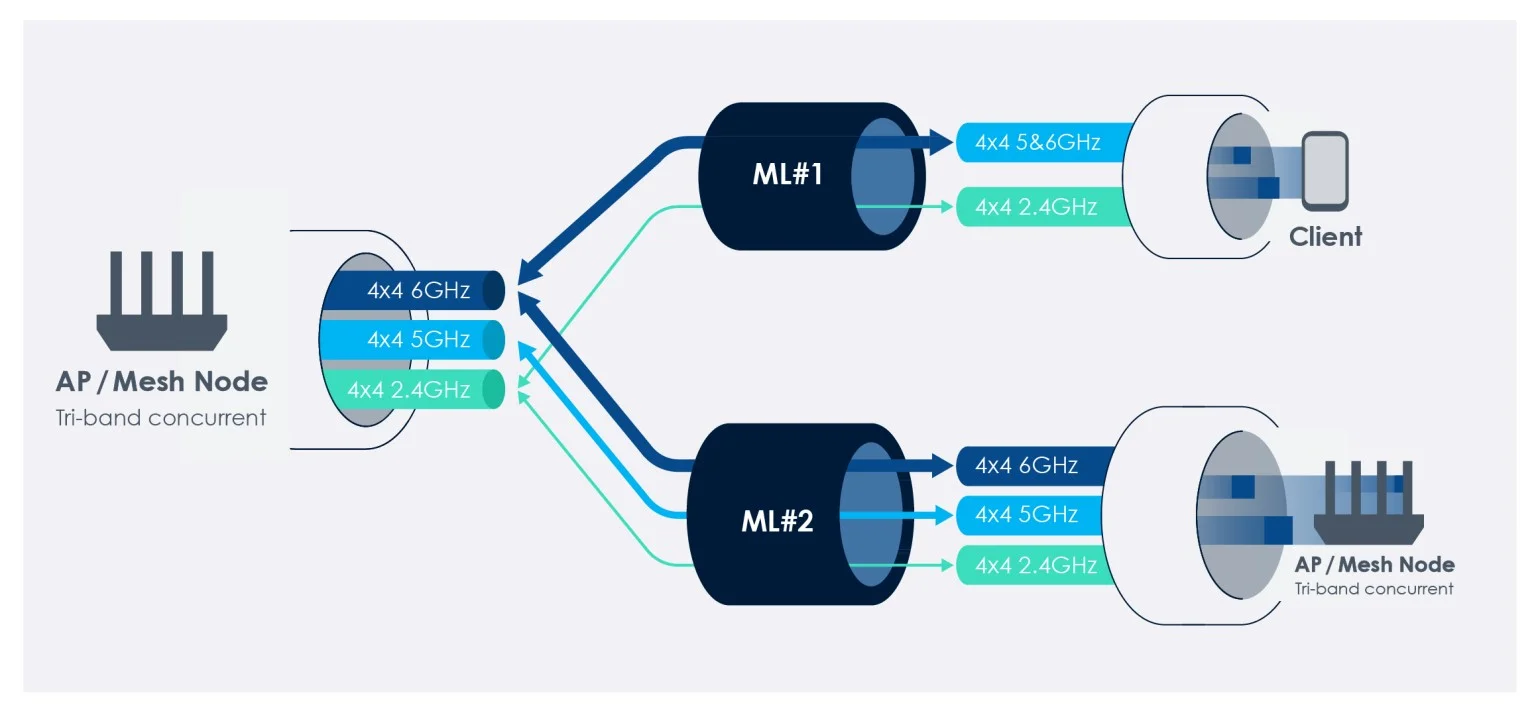
Schéma de fonctionnement de la technologie MLO (Multi-Link Operation) du Wi-Fi 7 pour une faible latence

Conclusion: Invest in the near future

WiFi 7 is not a gimmick. For high-density environments like co-working, logistics, or retail, it’s an essential infrastructure that solves major operational problems.

If you plan to renew your network in the next 18 months, ignoring WiFi 7 would be a strategic mistake. It ensures a network capable of handling today’s usage, but especially the innovations of tomorrow (augmented reality, massive automation, IoT).

Is your network ready for high density? Contact our experts for an audit of your infrastructure.

Imagine a Monday morning in a fully packed co-working space: a hundred people are simultaneously starting a video conference. Imagine a warehouse where autonomous robots suddenly stop due to a micro network outage. Imagine a shopping mall on the first day of sales, where payment terminals are struggling because too many customers are trying to connect to the public WiFi.

These scenarios are the nightmare of infrastructure managers. Until now, the solution was to add more WiFi access points, often creating more interference than solutions.

The era of "more access points" is over. Welcome to the era of "smarter" WiFi: WiFi 7 (standard 802.11be).

This is not just a speed upgrade; it’s a complete redesign specifically crafted for very high-density environments and critical requirements. Here’s why your business should pay attention to it right now.

In short: What changes with WiFi 7?

Without drowning you in technical details, remember three major advancements that are game changers for professionals:

  1. "Highways" twice as wide (320 MHz Channels): On the 6 GHz band, WiFi 7 doubles the width of the highway. More space means more data flows without traffic jams.

  2. Increased data density (4K QAM): Each transmitted signal carries 20% more information than WiFi 6. It’s like optimizing the loading of a truck to fit more packages.

  3. The MLO revolution (Multi-Link Operation): This is THE game changer for professionals. We’ll get back to this, but imagine being able to use multiple connections simultaneously for unbeatable reliability.

Sector Analysis: The concrete benefits of WiFi 7

WiFi 7 shines brightest when the network is under pressure. Let’s examine its impact on three particularly demanding environments.

1. Co-Working Spaces and Flexible Offices

In a co-working space, WiFi is not a convenience; it’s the main product you sell. Users are demanding: each has a laptop, a smartphone, a smartwatch, and spends their day on Teams or Zoom.

Current challenges: Saturation during peak hours, unbearable latency during video calls, random disconnections when the user moves from a desk to a meeting room.

The WiFi 7 solution: The end of "lags" in video calls Thanks to its massive capacity and ultra-low latency, WiFi 7 ensures that the 100th person starting a 4K video experiences the same smoothness as the first. The MLO technology allows devices to instantly switch from one band to another if one is congested, making call dropouts nearly impossible.

  • Business benefit: Increased customer satisfaction, reduced churn rate, and justification for premium pricing for an infallible "Business Grade" service.

2. Warehouses and Logistics (Industry 4.0)

Modern warehouses are no longer just storage places; they are technology hubs. They are filled with metal (which disrupts WiFi), mobile devices (scanners), and increasingly, autonomous robots (AMR).

Current challenges: Dead zones due to metal racking, latency disrupting real-time communication between robots, and the difficulty of managing devices in constant motion.

The WiFi 7 solution: Reliability and Low Latency for Automation In industry, speed matters less than latency (the network's reaction time). WiFi 7 offers near-zero latency, crucial for robots to coordinate their movements without collision. Additionally, improved interference management provides better coverage in hostile environments filled with metal.

  • Business benefit: Fewer picking errors, more advanced automation without resorting to expensive private 5G, and maximum operational continuity.

3. Shopping Malls and Retail (Phygital)

The shopping mall must manage two worlds: a massive "guest" network for thousands of simultaneous visitors and a "critical" network for the stores (payment terminals, inventory management, security cameras).

Current challenges: The guest network saturates and becomes unusable during peak times (sales, Christmas). Worse, this saturation can overflow and impact the store's checkout systems.

The WiFi 7 solution: Segmentation and Massive Capacity WiFi 7 excels at managing thousands of simultaneous connections without collapsing. It effectively segments the traffic: the thousands of customers' smartphones on wide bands, while the payment terminals use dedicated and secure channels, all on the same physical infrastructure.

  • Business benefit: Improved visitor experience (who stays longer), guaranteed business transactions for tenants, and opening up to more precise location-based marketing services.

The Wild Card of WiFi 7: The MLO (Multi-Link Operation)

If there’s one thing to remember, it’s this.

Before WiFi 7, your device would select a frequency band (for example, 5 GHz) and stick to it. If that band was disrupted, you were disconnected until you found another one.

With MLO, your device can connect to both the 5 GHz and 6 GHz bands simultaneously.

  • Aggregation Mode: It combines the speeds of both for phenomenal throughput.

  • Reliability Mode (Most important for professionals): It sends the same data over two bands. If interference blocks the first route, the data still arrives via the second, instantly. This is the end of micro-outages.

Schéma de fonctionnement de la technologie MLO (Multi-Link Operation) du Wi-Fi 7 pour une faible latence

Conclusion: Invest in the near future

WiFi 7 is not a gimmick. For high-density environments like co-working, logistics, or retail, it’s an essential infrastructure that solves major operational problems.

If you plan to renew your network in the next 18 months, ignoring WiFi 7 would be a strategic mistake. It ensures a network capable of handling today’s usage, but especially the innovations of tomorrow (augmented reality, massive automation, IoT).

Is your network ready for high density? Contact our experts for an audit of your infrastructure.
Category

Infrastructure & Networks

Infrastructure & Networks

Infrastructure & Networks

Blog & Articles
Blog & Articles
Blog & Articles

Latest news and trends

Career

Looking to join a company where Wi-Fi expertise makes a difference?

At Meltwain, we value talents who are passionate about networking, service quality, and innovation. Join a certified team (CWNE, ECSE, Ubiquiti...) and contribute to exciting technical projects in Luxembourg and Europe.

Deux professionnels collaborent lors d'une séance de brainstorming
Career

Looking to join a company where Wi-Fi expertise makes a difference?

At Meltwain, we value talents who are passionate about networking, service quality, and innovation. Join a certified team (CWNE, ECSE, Ubiquiti...) and contribute to exciting technical projects in Luxembourg and Europe.

Deux professionnels collaborent lors d'une séance de brainstorming
Career

Looking to join a company where Wi-Fi expertise makes a difference?

At Meltwain, we value talents who are passionate about networking, service quality, and innovation. Join a certified team (CWNE, ECSE, Ubiquiti...) and contribute to exciting technical projects in Luxembourg and Europe.

Deux professionnels collaborent lors d'une séance de brainstorming

Based in Luxembourg, Meltwain supports businesses and institutions in establishing Wi-Fi networks that are reliable, high-performing, and perfectly tailored to their environment, with a startup flair.

© 2025 Meltwain Inc. All rights reserved

Based in Luxembourg, Meltwain supports businesses and institutions in establishing Wi-Fi networks that are reliable, high-performing, and perfectly tailored to their environment, with a startup flair.

© 2025 Meltwain Inc. All rights reserved

Based in Luxembourg, Meltwain supports businesses and institutions in establishing Wi-Fi networks that are reliable, high-performing, and perfectly tailored to their environment, with a startup flair.

© 2025 Meltwain Inc. All rights reserved